
When funding and farmer commitment align, catchment-scale change follows
- Holly Ormond
- May 15
- 2 min read


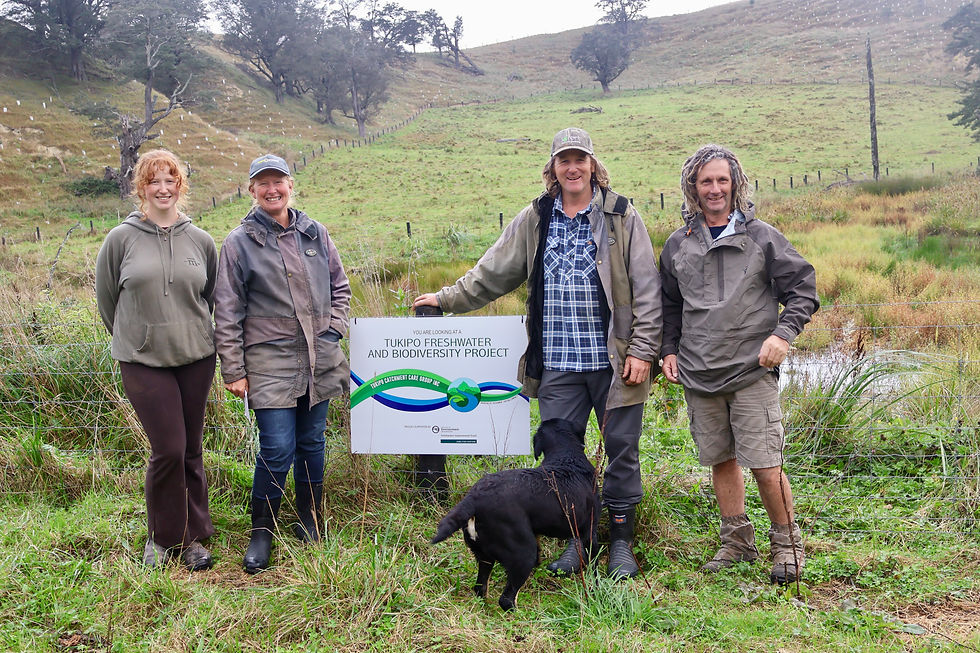
A wet Hawke’s Bay day didn’t dampen spirits at the recent Tukipo Tiki Tour in Ashley Clinton. If anything, it reinforced the resilience and commitment of a farming community that has spent the past five years working together to improve its catchment.
The tour marked the nearing completion of the Tukipo Catchment Care Group’s (TCCG) freshwater project, with a total value of $5m, including $2.2m from the Ministry for the Environment Freshwater Improvement Fund, and the remaining $2.8 million representing direct landowner contribution and co-investment across the catchment.
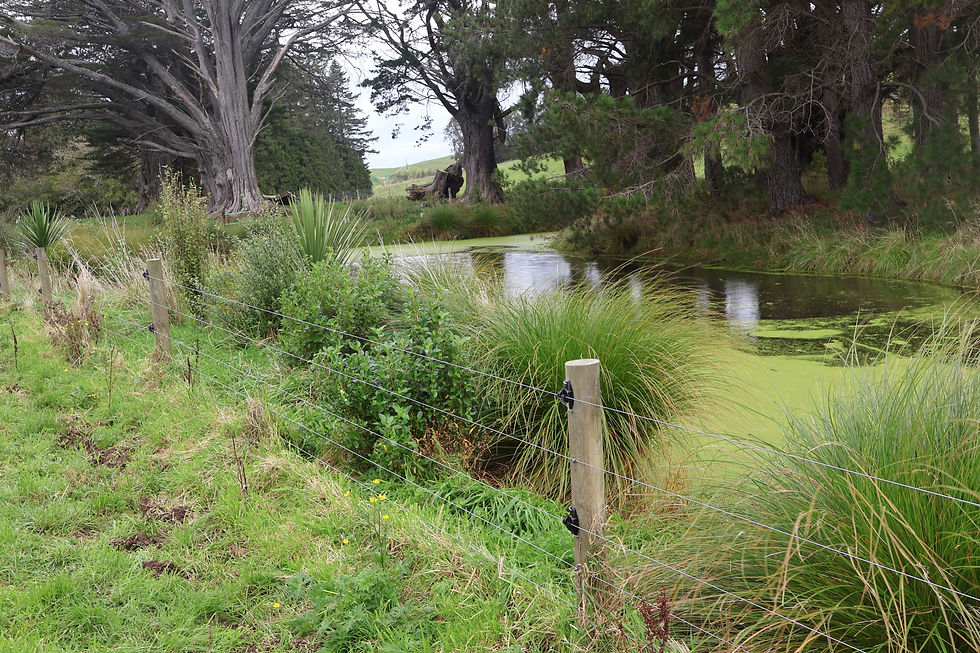
Across eight farms, landowners opened their gates to showcase work ranging from riparian planting and fencing to wetland creation, dam development and agroforestry.
While the scale of activity is impressive, the project’s real strength lies in how it was delivered: farmer-led, locally driven, and supported by targeted funding that enabled action at pace.
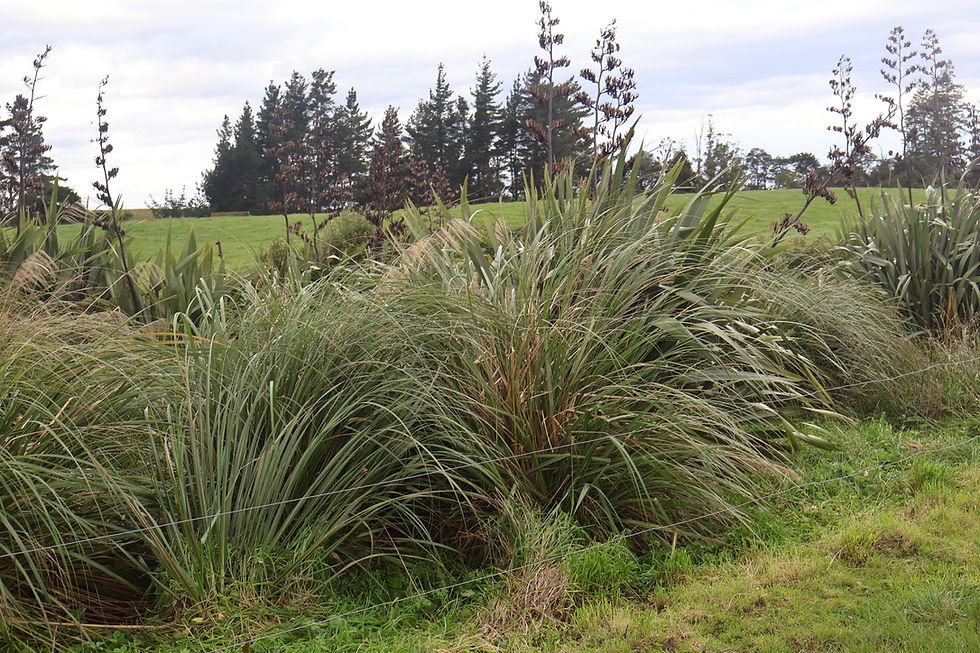
More than 230,000 native plants have been established across the catchment, alongside over 60 kilometres of riparian fencing and the creation of 40 wetlands. Over the life of the project, more than 70 landowners have been involved, contributing their own time, resources and co-investment. It highlights what can be achieved when farmers are supported with administrative coordination and funding.
“What’s been achieved here isn’t just about the numbers, it’s about farmers working together with a shared purpose. The funding supporting farmer's own drive and inputs made it possible, but the administrative support by co-ordinator Michelle Goodman and others behind the scenes has been just as critical in turning that into action on the ground,” says TCCG Chair Colin Tyler.
Catchment groups play a critical role in bridging the gap between funding and delivery, aligning priorities and coordinating work programmes so farm-level effort contributes to wider environmental outcomes. At the same time, success relies heavily on landowners being willing to take part and make long-term changes to their land use.
“There’s definitely a level of commitment needed. These aren’t quick fixes. But being part of a wider catchment effort gives you confidence to make those longer-term changes,” says Tukipo farmer Tom Tennent.
The Tukipo Tiki Tour offered a chance to step back and recognise that combined effort. Despite the rain, turnout was strong, with farmers gathering over coffee and lunch, sharing stories, and putting a few more plants in the ground. It was less about showcasing finished work, and more about acknowledging what’s been achieved together.
As environmental expectations on farming continue to evolve, the Tukipo project provides a practical example of what progress can look like at catchment scale. It shows that when funding is accessible, well-structured and aligned with farmer priorities, it can unlock significant on-the-ground change.
With current uncertainties around catchment group funding, maintaining this momentum will depend on continued investment in both on-the-ground work and the support structures behind it.
Perhaps most importantly, it demonstrates that meaningful outcomes don’t rely on isolated effort. With a shared goal and the right support, farming communities are well placed to lead the way.




Comments